Acute Appendicitis
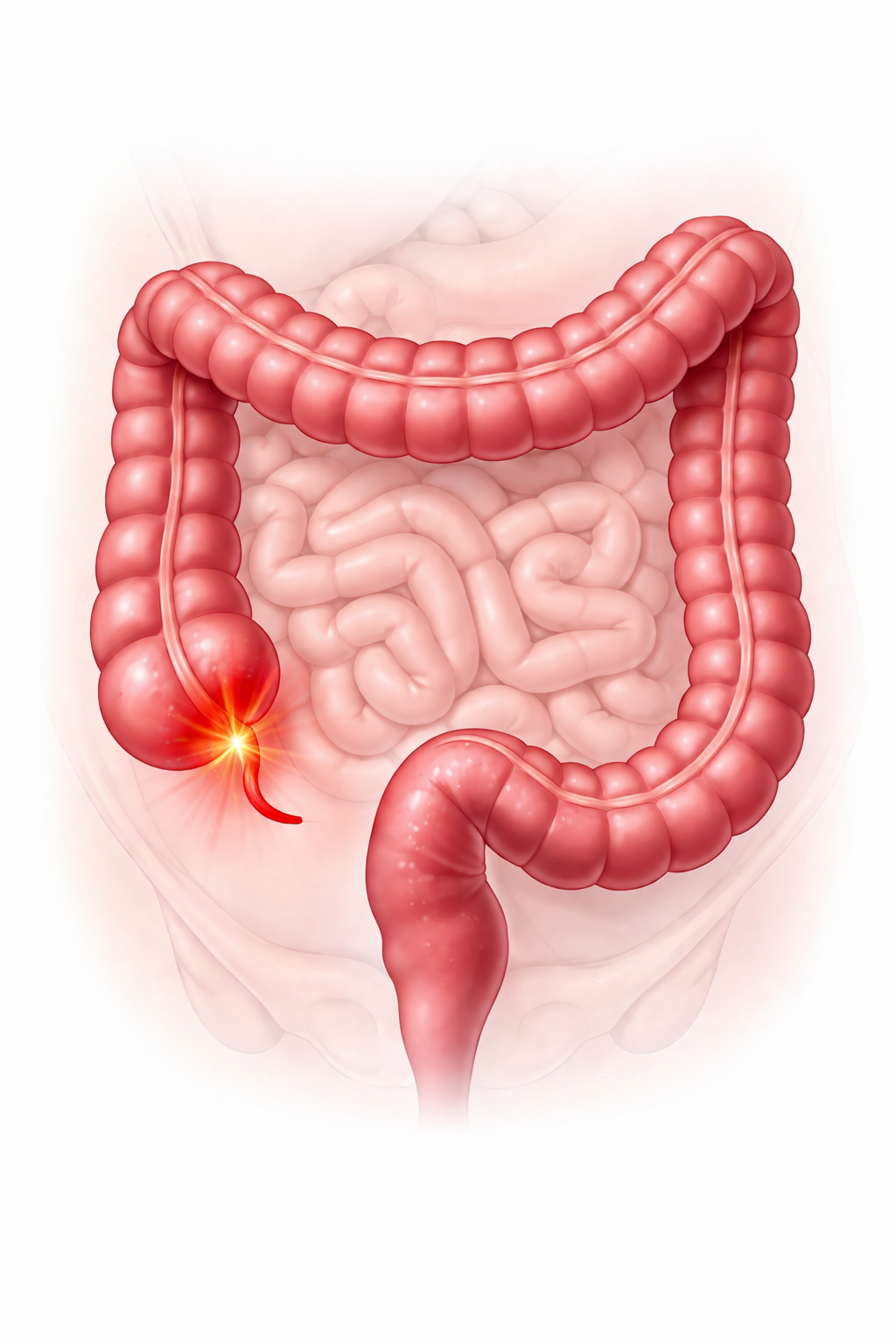
Acute appendicitis is one of the most common diseases requiring surgery seen in patients admitted through the Emergency Department.
Approximately 7% of people will be affected by this problem. It is often seen at the extremes of age- ie children/teenagers and then in patients over 50.
The appendix is a small extension on the first part of the large bowel. Acute appendicitis begins when the appendix becomes blocked at its opening to the bowel, usually from a piece of faeces but rarely can be secondary to a polyp or lesion. Due to the blockage, the pressure inside the appendix builds and the tiny blood vessels are compromised and the appendix can become gangrenous. If this occurs, then the appendix will eventually burst.
Typical symptoms include generalised abdominal pain which localises to the right side of the abdomen. Other symptoms include a loss of appetite, fevers, loose bowels and feeling generally unwell. Children (and adults) often report that the pain is worst with sudden movement such as going over bumps in the car.
The definitive treatment for appendicitis is surgery, which is typically performed by laparoscopy (keyhole surgery). There is some evidence that, in certain circumstances, appendicitis may be managed with antibiotics alone. However, there is an up to 30% recurrence rate within 12 months and hence the standard of care in Australia remains surgery. You can discuss all of this with Dr Gillespie.
Treatment,
tailored to you
Gallbladder surgery
Removal of the gallbladder- otherwise known as cholecystectomy- is almost always done via a laparoscopic, or keyhole, approach. This is usually performed electively either as day surgery or with a one-night stay in hospital.
Dr Gillespie specialises in the following procedures
Abdominal Wall Hernia Repair
There are many different types of abdominal wall hernia- but this can include umbilical (naval) and incisional hernias.
They are always repaired under a general anaesthetic.
Gastrectomy
A gastrectomy is performed for the surgical management of gastric (stomach) cancer. It involves the removal of the tumour with the stomach itself ensuring that the entire cancer is removed, along with removal of the lymph nodes that would typically be the first place that cancer would spread.
Fundoplication (Anti Reflux Surgery)
A fundoplication is a surgical procedure performed for people with proven gastro-oesophageal reflux that cannot be managed with medication alone. It is also performed as part of a hiatus hernia repair. It is usually performed laparoscopically.
Hiatus Hernia Repair
Most hiatus hernia surgery is performed laparoscopically (keyhole surgery) and involves returning the stomach to the abdominal cavity and then repairing the hernia itself.
Inguinal (groin) hernia repair
This is generally done via a laparoscopic (keyhole) approach under a general anaesthetic. There may be some circumstances where an open approach is preferable and Dr Gillespie will discuss the details specific to you when consenting for surgery.
Endoscopy (Gastroscopy/Colonoscopy)
Endoscopy is performed under either a sedation or general anaesthetic. It is a day procedure that occurs in hospital.
Oesophagectomy
An oesophagectomy is performed to remove a tumour of the oesophagus or the junction between the oesophagus and stomach, along with the lymph nodes to which this cancer tends to spread first.
Weight Loss Surgery
First of all, congratulations on making the first step towards a real lifestyle change. We know that most people will have already explored many options before enquiring about weight loss surgery.
Often, people are sick of the cycle of weight loss followed by weight regain. And many people will find that after working hard to lose weight, they can even put more back on. This process can be so disheartening. While weight loss surgery is by no means an "easy" way out, it can help break this cycle and empower you with the tools to have long lasting weight loss.
But more important than the number on the scales, bariatric surgery can help with obesity related complications and allow you to live a life without compromise.