
Weight Loss (Bariatric) Surgery in Sydney’s North Shore
How we can help.
The challenge of losing weight can be very difficult for many. We know that people try their best with making dietary, exercise and lifestyle changes, only to find they can’t achieve the desired results. This is because often your body is working against you, trying to get back to the weight or "set point" that you started at.
Surgery has been shown in randomised trials to provide more reliable and sustained weight loss than diets alone. It can act as a reset, helping to decrease hunger and increase fullness. The cause of weight loss after surgery involves complex gut hormone changes.
We have described the types of procedures performed below. But don’t worry- all of this will be discussed at your appointment and an individual recommendation will be made based on your medical history, lifestyle, and goals.
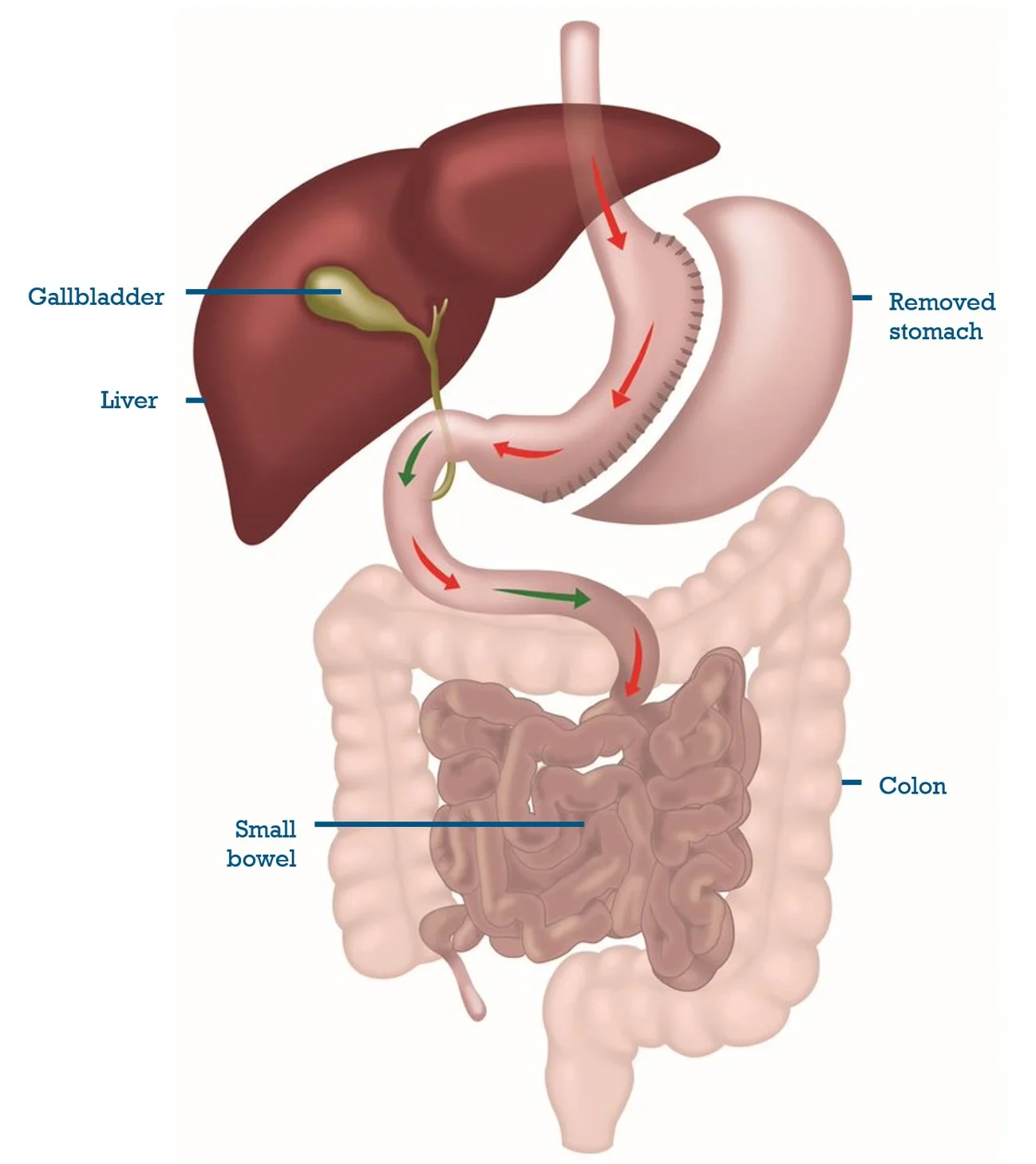
Laparoscopic sleeve gastrectomy
The sleeve gastrectomy was initially used as the first in a two-stage weight loss procedure for the super morbidly obese. However it has gained popularity as a stand alone operation and is now the most commonly performed weight loss procedure in Australia.
It involves removing approximately two-thirds of the stomach. This is done via a laparoscopic (key-hole) technique. A plastic tube, known as a Bougie, is placed down the gullet and into the stomach to calibrate the amount of stomach remaining. Once in place, a surgical stapling device is used to create the new stomach tube. The excess stomach is then removed from the abdomen.
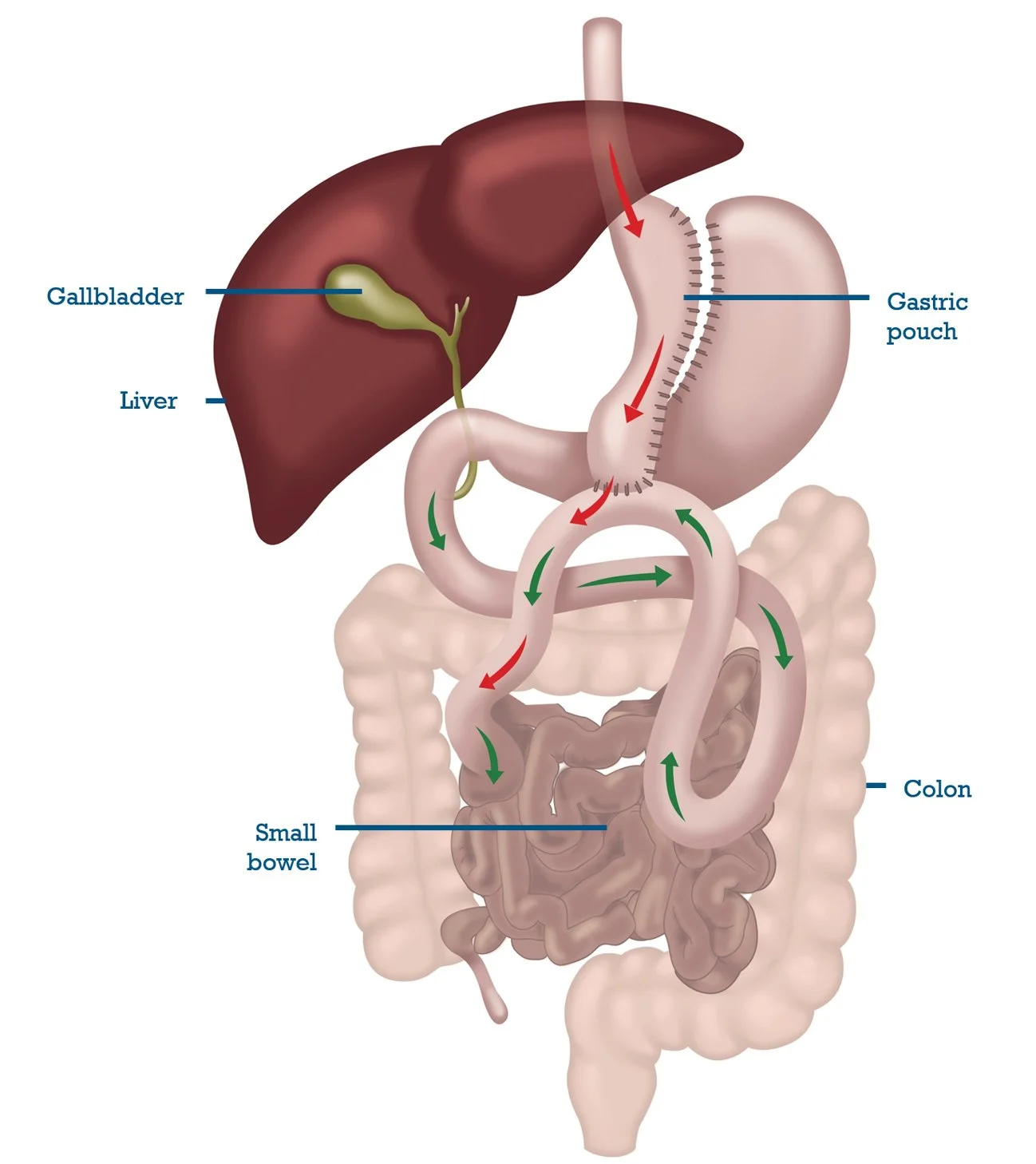
Laparoscopic one anastomosis bypass
The single anastomosis gastric bypass is also known as a single loop bypass, an Omega loop bypass or a “mini” gastric bypass.
Similar to a Roux-en-Y bypass, it begins with creating a smaller stomach pouch. This is done using a stapling device via a laparoscopic (key hole) technique. After the pouch is created, it is joined to the small bowel approximately 150-200cm downstream. Hence the term mini or single loop- as there is only one anastomosis, or join.
The end result is that the digestive fluids from the liver/pancreas and food meet further downstream, and there is a shorter “common channel” for the digestion and absorption of nutrients.
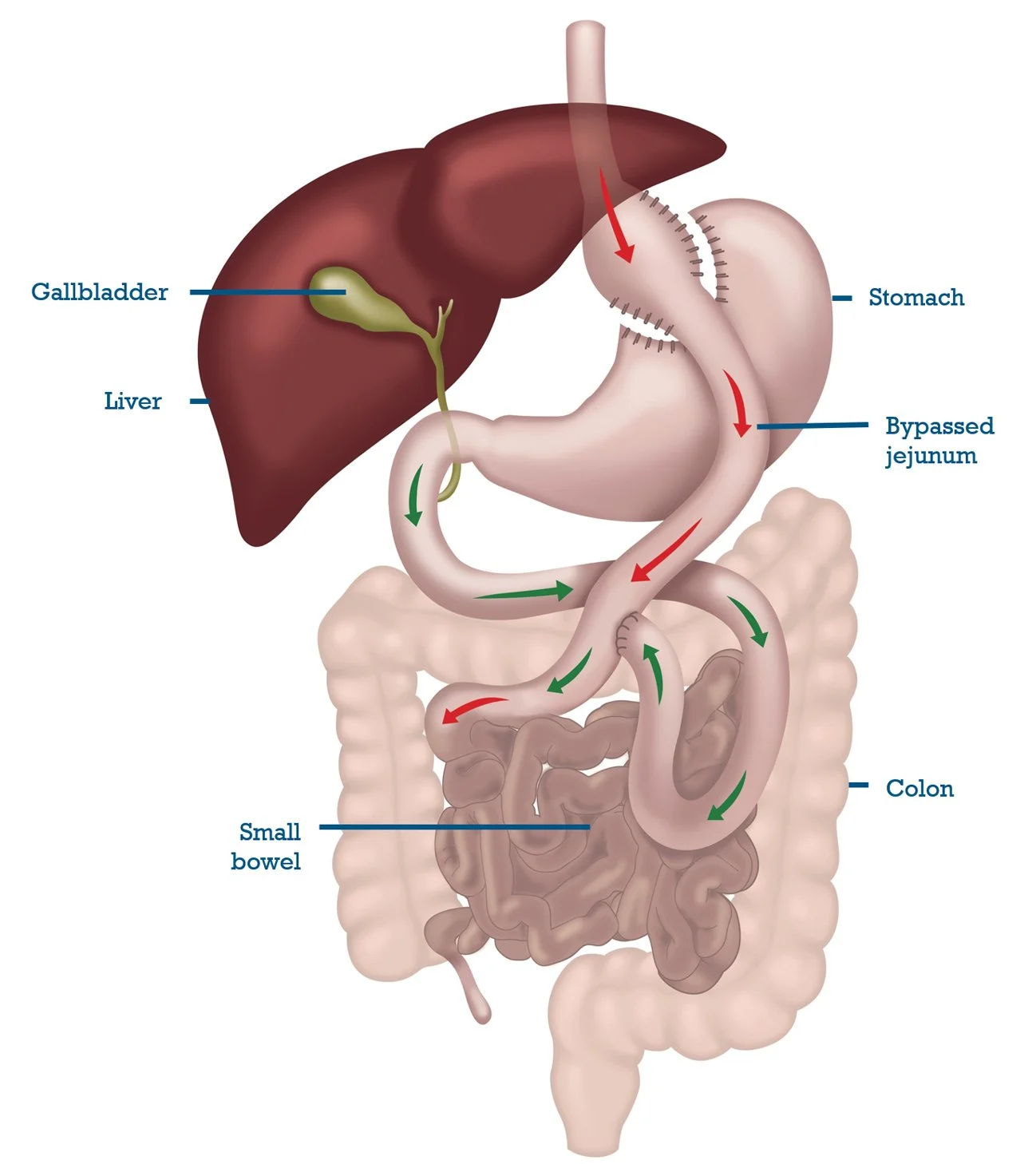
Laparoscopic roux en y bypass
This keyhole procedure is one of the original weight loss surgeries designed to help those suffering from obesity. Its name is a French term meaning “in the form of a Y”.
First, the stomach is divided into a smaller top portion (pouch) which initially holds around 30mls. The larger part of the stomach is bypassed and no longer stores or digests food.
The small intestine is also divided and joined to the new stomach pouch to allow food to pass. The small bowel segment which empties the bypassed stomach is connected into the small bowel downstream, resulting in a bowel connection resembling the shape of the letter Y.
This means that digestive fluids and food meet further downstream, and the end result is a shorter “common channel” for digestion and absorption of nutrients.
Revisional procedures are sometimes necessary due to inadequate weight loss, weight regain, or complications such as reflux. If this is something you would like to discuss, please book an appointment to see what might be right for you.
The Patient Journey
Book an appointment
Call or email Dr Gillespie’s rooms to book an appointment. You will need a referral from your GP or specialist if you would like a Medicare rebate. You will be sent a Bariatric Questionnaire to complete prior to your first appointment.
First Consult
You'll meet with Dr Gillespie to discuss your history and what options might be right for you. This consult is ideally in person but zoom calls are also available.
Our secretaries can also discuss with you finance options including using private health insurance, self-funding surgery or accessing early release of super.
Preparation
If you would like to pursue surgery, a workup takes place including pre-operative bloods and occasionally other imaging or endoscopy.
You will then be reviewed by our dietitian to help with pre-operative education.
Pre-operative diet
Most patients are placed on two weeks of a Very Low-Calorie Diet (VLCD). This helps to shrink the liver through rapid weight loss, and makes the anaesthetic safer. The details for this will have been discussed at your pre-op consult and dietitian review.
Surgery
Once the preparation is done, we will book you in for a date for your surgery! This will usually involve a one-night stay in hospital. You will be admitted on the day of surgery and the hospital will provide fasting instructions the day prior.
Follow up
We like to follow you pretty closely for the first 2 years post procedure. This includes both surgeon and dietician visits.
It is also a great way to make sure you stay on track!



Dr Gillespie’s
Professional Associations
Once you have your GP referral, contact our rooms via phone, email or our enquiry form to book your appointment.